

We played in our first regional U.S. Kids Tournament this weekend.
Back in my home state of Pennsylvania.
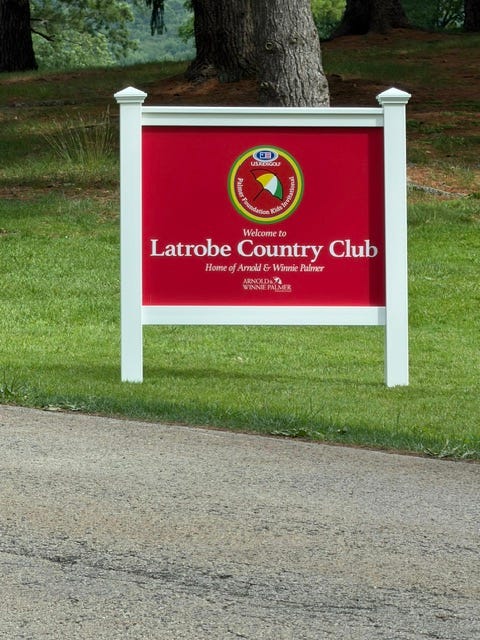
On the western side — in Latrobe—birthplace of the banana split, hometown of Fred Rogers, and home to one of golf’s most beloved figures: Arnold Palmer.
Mr. Palmer’s legacy is what brought us there.
The 2nd Annual Palmer Foundation Kids Invitational at Latrobe Country Club honors “The King” on his home course while celebrating his influence on future generations.
It featured a field of 160 players from 30 states & 6 different countries.
For a young golfer, it felt like a big stage.
THE ROAD TO LATROBE
We qualified for the regional through our performance on the local fall tour.
Strong finishes earned priority status, which opened the door to register for events like this one.
It was our first multi-day U.S. Kids tournament and our first time playing 18 holes in regional competition.
That alone felt like a milestone.
But the venue made it even more special.
Latrobe Country Club is where Arnold Palmer learned the game.
He grew up in a modest home not far from what is now the 5th tee. His father, Deacon Palmer, served as both head professional and greenskeeper—roles that often went hand-in-hand back then.
Access to the course wasn’t always easy for club pros and their families.
So young Arnold sometimes slipped out after hours to play a little night golf, hitting from the rough to avoid damaging the carefully maintained turf his father tended.
Deacon wasn’t just a caretaker of the course.
He was a caretaker of his son’s game and character.
PRACTICE MAKES… PROGRESS
Even though we were high in Pennsylvania’s Laurel Highlands and grabbed one of the earliest tee times; it was a hot, humid final week of Spring.
Add in the steep, rolling terrain of Latrobe, and the course quickly reminded us that it wasn’t going to give anything away.
We played the first nine holes alongside two younger players.
“Struggling” would be the generous description.
The back nine, played mostly on our own, wasn’t much better.
But golf has a way of rewarding persistence.
An evening spent on the putting green, followed by a focused range session the next morning, helped us develop a clearer plan for tournament play.
ROUND ONE
Latrobe’s driving range sits in the middle of the golf course, making pre-round practice challenging when hundreds of junior golfers are trying to prepare.
So players started their day at a nearby course before heading over for their tee times.
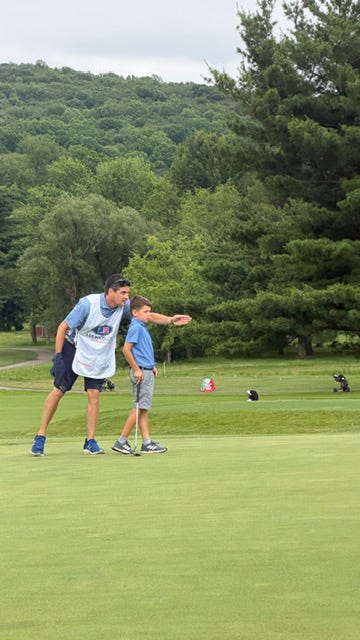
The round began promisingly with two pars.
But that quickly evaporated in the mid-day heat with a double bogey on 3 — where a shot that came up short on the crowned green rolled back down the slope, and its follow-up landed on a sprinkler head.
Golf can be cruel.
Fortunately, the very next hole offered redemption.
A 40-foot birdie putt disappeared into the cup.
But it would be the only one.
The groove finally appeared in the form of five straight pars to close the round.
We finished the day mid-field at +6.
ROUND TWO
Our finish on Day One moved us up a pairing for the final round.
And another mid-day tee time.
This time, though, the momentum from the previous afternoon carried over.
Four straight pars to start.
Steady golf.
We turned in 1-under par on the front nine.
It was a dramatic change from the previous day, and an even bigger change from the practice round.
The back nine tested our resolve.
Two bogeys could have derailed it all.
Instead, they were answered with more birdies and even more pars.
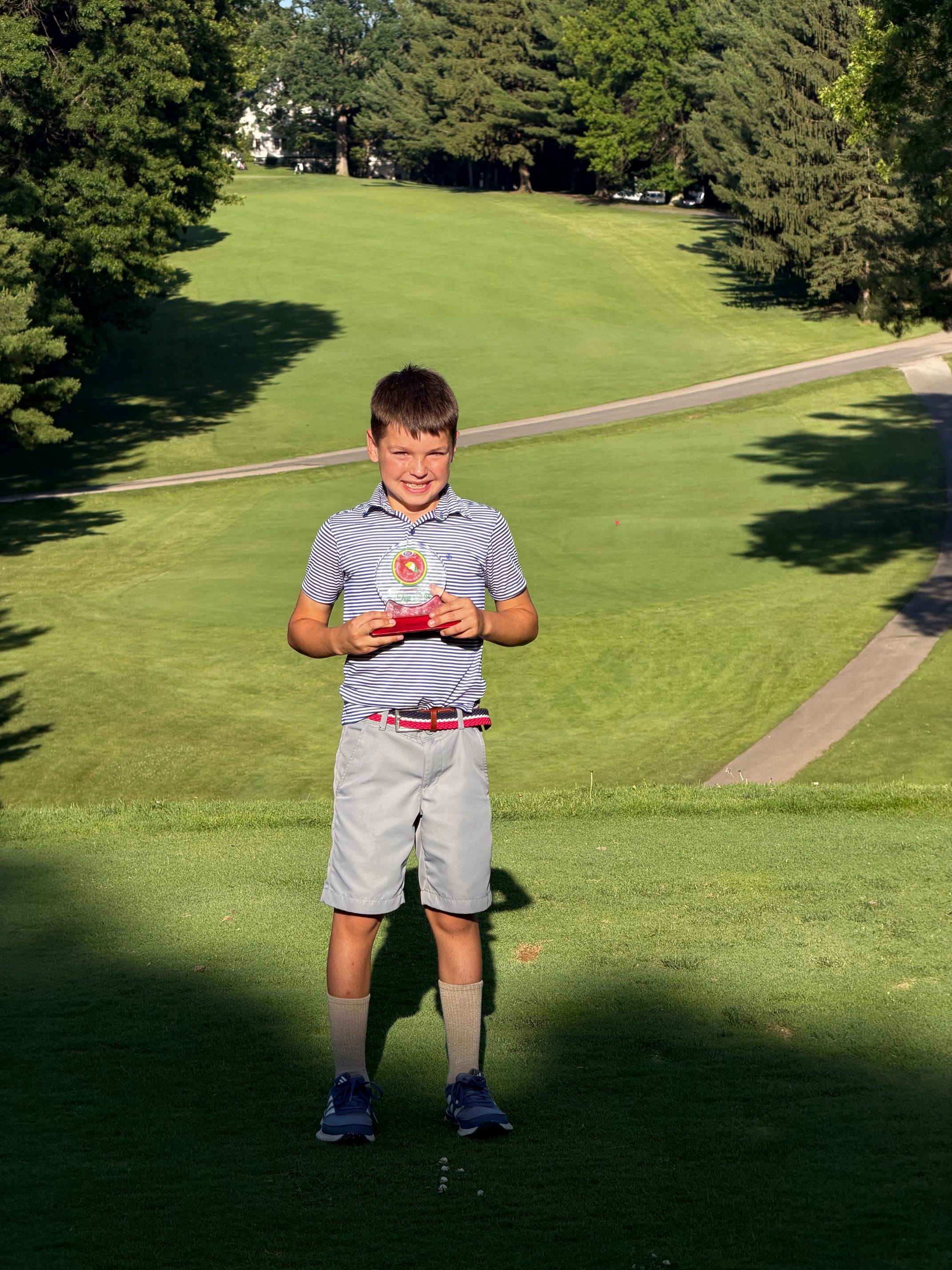
When the final putt dropped, we had posted a 2-under-par 70.
The only under-par round for the Boys 9 field either day.
More importantly, it earned our first U.S. Kids regional trophy: a tie for 4th Place.
LESSONS LEARNED
Every tournament teaches something.
This one reinforced the value of local knowledge and preparation.
Many players in the field had competed in the inaugural Palmer Invitational the year before.
They already knew where to miss, how the greens reacted, and which holes demanded patience.
The event also served as another reminder of one of golf’s most important lessons: handling setbacks.
Bad shots happen.
Bad breaks happen.
The key is not allowing one moment to affect the next.
And perhaps the best part of the entire week had nothing to do with scores.
After the rounds, players gathered on the practice green creating games, challenging one another, and simply enjoying being kids.
Some had traveled a few dozen miles.
Others had crossed state lines — or oceans.
But in those moments, none of that mattered.
They were just young golfers sharing a love for the game, the competition, and the friendships that come with it.
I think it would have made Mr. Palmer — proud.