

We’re all watching the pros play storied Augusta this weekend.
Rooting for Rory, of course — for reasons we’ve covered before.
It’s hard to imagine the pressure to perform in a major this size.
For the rest of us — there’s the kind of pressure that shows up on a bucket-list course.
It’s not the same as a member-guest.
It’s not your Saturday game.
It’s not even a tournament.
It’s wanting your A-game at this very moment.
You may have spent weeks or months talking about the course.
And visualizing the round.
Maybe you’ve watched the pros play it — and now it’s your turn.
Whether it’s the Ocean Course at Kiawah, Pebble Beach, Bandon Dunes or Pinehurst No. 2, the expectation is the same: This is supposed to be special.

Why Great Courses Expose You Faster
Bucket-list courses aren’t just beautiful — they’re demanding.
Take Kiawah, for example.
At The Golf Studio — we’ve been preparing players to play Ocean for years.
What makes it so difficult?
The wind changes everything
The visuals are intimidating
The margins are smaller than they look on TV
These courses don’t just test your swing.
They test your decisions, your patience, and your expectations.
We saw that firsthand over Spring Break last week.
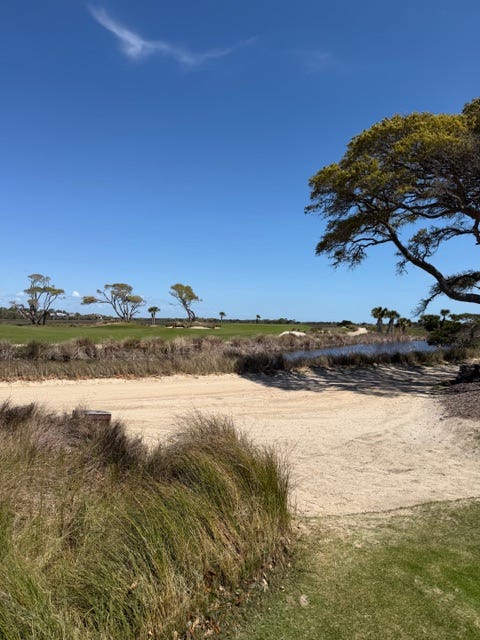
Kiawah is one of the most notoriously difficult courses in the U.S. — a Pete Dye design — 30 miles south of Charleston.
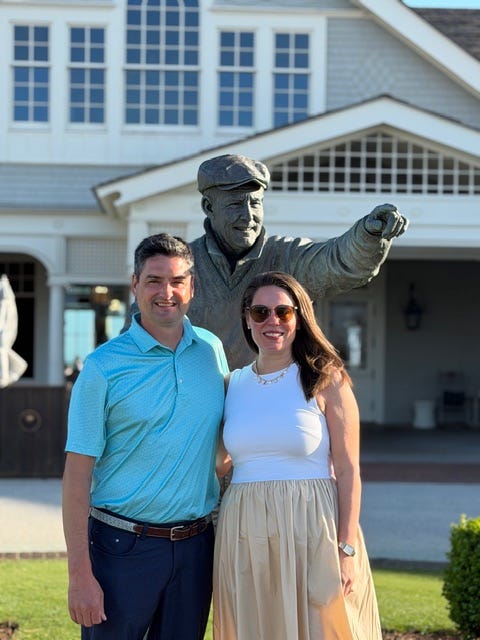
It’s stunning, with more seaside holes than any course in the Northern Hemisphere.
But all that beauty comes with a price: wind.
Yardages can shift by 100 yards depending on conditions.
That’s where preparation has to meet the moment.
What Preparation Really Looks Like
Most golfers think preparation means “playing better.”
That’s part of it — but it’s not the most important part.
Preparation helps you experience the course the way it’s meant to be experienced.
That means:
Knowing where you can miss (and where you can’t)
Understanding how the course will play for you
Having a plan when things go sideways
Managing expectations before you step on the first tee
You don’t need to play great to enjoy a bucket-list course.
But you do need to do the work on your game.
Great Rounds vs Great Experiences
We’ve seen it over and over again.
Two golfers, same trip, same tee time, same conditions.
One walks off saying:
“That was incredible. I’d do that again tomorrow.”
The other says:
“I wish I played better. I feel like I wasted it.”
The golfer who enjoys it more:
Knows what to expect
Accepts the difficulty
Has a strategy for the course
Doesn’t let one bad hole spiral into five
They’re playing their game on that course.
Family golfers are in a unique spot.
We care about the experience—but we also don’t get unlimited reps at places like this.
So the tendency is to put more weight on the round itself — especially if it comes with a significant price tag.
That’s where the shift needs to happen.
Instead of asking:
“How do I play well here?”
Ask:
“How do I make sure I enjoy this no matter how I play?”
That mindset usually leads to better golf no matter where you are.

If You’re Planning a Bucket-List Trip
Get to work even before you book the tee time.
Study the course (not obsessively — intentionally)
Understand your game relative to the layout
Build a simple, realistic strategy
Prepare for conditions (wind, greens, visuals)
And most importantly:
Decide ahead of time what a “great day” actually looks like.
Because if the only answer is “playing well,” you’re leaving a lot up to chance.
If you’re thinking about a place like Kiawah — or planning a trip with friends, family, or co-workers — reach out to The Golf Studio. We’ll help you show up ready.